Bhutan culture · festivals · tshechus
Bhutan festival guide
Discover Bhutan through its living traditions, sacred festivals, masked dances and community celebrations, organised by region and season to help you plan your journey.
Understanding Bhutan's festivals
Living traditions of the kingdom
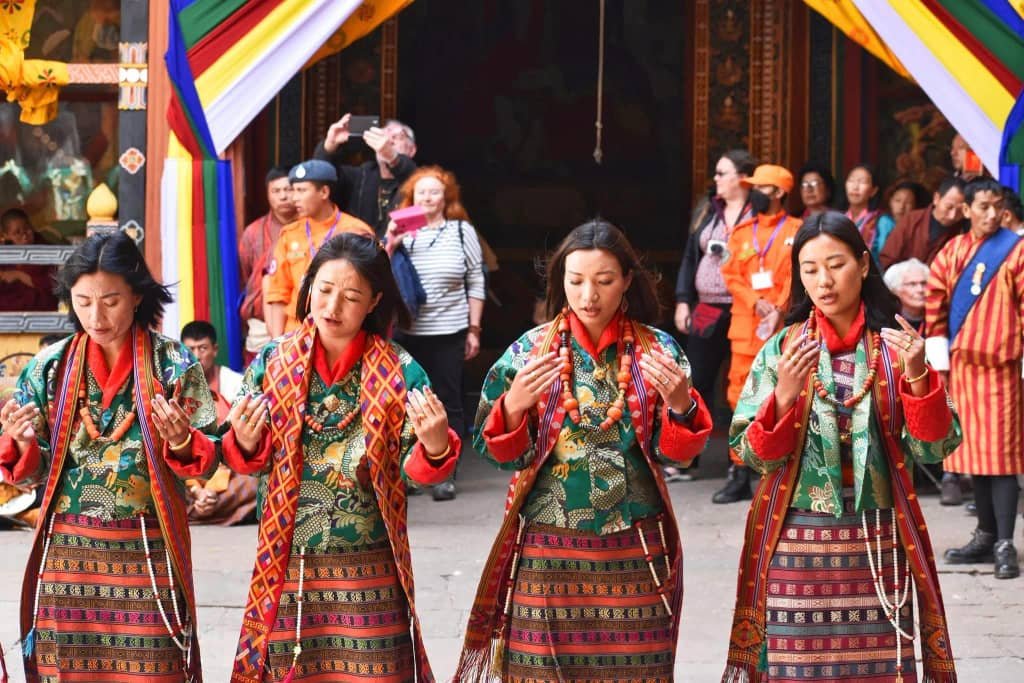
For the people of Bhutan, festivals are vibrant, living expressions of the country’s ancient Mahayana Buddhist culture. These sacred multi-day celebrations bring together masked dances (chams), traditional music, religious ceremonies and colourful community gatherings.
Families and communities come together dressed in their finest hand-woven traditional clothing, transforming monasteries and dzongs into remarkable centres of culture, devotion and social life.
Travelling during a festival provides an opportunity to experience Bhutan beyond its landscapes and monuments, through traditions that remain deeply connected to everyday community life.
When to experience Bhutan
Festival seasons
Bhutan’s festival calendar extends across different seasons and regions. Use this seasonal guide as a starting point when planning your journey.
Spring
February – May
A major festival period with celebrations taking place across western, central, eastern and southern Bhutan.
Summer
June – August
Summer brings regional celebrations including festivals in Bumthang and cultural events such as the Haa Summer Festival.
Autumn
September – November
Autumn includes major celebrations such as Thimphu Tshechu, Wangdue Tshechu and the Gangtey festival period.
Explore by region
Festival directory
Major tshechus, religious festivals and cultural celebrations across Bhutan, with the dates currently published for 2026 and 2027. Festival dates follow the lunar calendar and can change, so please confirm them with us before you book flights.
Paro
18–22 March 2027 · Spring
Paro Tshechu
Bhutan's most famous spring festival, held at the historic Rinpung Dzong. The celebration features spectacular masked dances, traditional performances and religious ceremonies.
Don't miss: the spectacular dawn unveiling of a giant silk appliqué tapestry on the final morning.
Punakha
13–18 February 2027 · Spring
Punakha Drubchen & Tshechu
A deeply historic gathering inside magnificent Punakha Dzong. The festival is famous for a dramatic costumed reenactment of a 17th-century battle against invading Tibetan forces.
16–18 March 2027 · Spring
Talo Tshechu
A more intimate and spiritual monastery festival held in the hills of Talo village, offering visitors an opportunity to experience local religious traditions away from larger tourist crowds.
Bumthang
20 February 2027 · Spring
Tharpaling Thongdrol
A single-day religious festival at Tharpaling Monastery, featuring the display of a massive sacred scroll.
18–22 April 2027 · Spring
Ura Yakchoe
A celebrated festival in the high valley of Ura, known for rural dance traditions, community gatherings and sacred local relics.
12–14 June 2027 · Summer
Nimalung Tshechu
An authentic and deeply spiritual festival held at Nimalung Dratshang.
14 June 2027 · Summer
Kurjey Tshechu
Held at Kurjey Lhakhang, one of Bhutan's most revered spiritual sites, associated with Guru Rinpoche.
Trashiyangtse
20 February / 8 March 2027 · Spring
Chorten Kora Festival
An important eastern Bhutanese celebration centred around the ancient Chorten Kora. Pilgrims gather to circumambulate the sacred stupa as part of an important religious tradition.
Trashigang
16–18 March 2027 · Spring
Gomphukora Tshechu
A popular festival in eastern Bhutan held around a sacred meditation cave associated with Guru Rinpoche.
Gasa
16–18 March 2027 · Spring
Gasa Tshechu
The principal annual festival of Gasa district, held in Bhutan's remote northern high-altitude landscape.
Zhemgang
16–18 March 2027 · Spring
Zhemgang Tshechu
A regional celebration held in the forested southern Kheng region, offering a more local and intimate festival experience.
Thimphu
22–23 April 2027 · Spring
Bhutan Rhododendron Festival
A nature-focused eco-festival held at Lamperi Botanical Garden, celebrating Bhutan's beautiful rhododendron species and alpine flora.
21–23 September 2026 · Autumn
Thimphu Tshechu
One of Bhutan's largest and most celebrated festivals, held at Tashichho Dzong and attended by thousands of residents and visitors.
2027: 10–12 October.
Wangdue Phodrang
19–21 September 2026 · Autumn
Wangdue Tshechu
Known for its energetic Raksha Mangcham, also known as the Dance of the Ox, and its distinctive local setting.
2027: 8–10 October.
Haa Valley
Mid-July each year · Summer
Haa Summer Festival
A vibrant celebration showcasing traditional nomadic lifestyles, alpine foods, religious sports and regional folk culture.
Gangtey / Phobjikha
2027 dates to be confirmed · Autumn
Gangtey Tshechu
Celebrated at Gangtey Goenpa monastery overlooking the pristine Phobjikha Valley and its high-altitude wetlands.
Combine the festival with a visit to the Phobjikha Valley and its remarkable natural surroundings.
Planning your festival journey
Build your journey around the festival
A festival can become the centrepiece of a Bhutan journey rather than simply another stop on an itinerary. Regional location, festival dates and the surrounding landscape can all be considered when shaping your route.
Step 1
Choose your region
Decide whether your journey will focus on western Bhutan, central valleys, eastern Bhutan or a combination of regions.
Step 2
Match your dates
Use the festival calendar to identify the celebration that fits your preferred travel period.
Step 3
Allow travel time
Regional festivals can be combined with sightseeing, cultural experiences and visits to surrounding valleys and monasteries.
Step 4
Plan ahead
Festival periods can require careful itinerary planning. Confirm dates and travel arrangements before finalising your journey.
Travelling with respect
Experience the festival with respect
Bhutanese festivals are religious and cultural occasions rather than performances created solely for visitors. Guests are encouraged to observe respectfully and remain mindful of local customs.
- Dress respectfully when visiting dzongs, monasteries and religious sites.
- Follow instructions from local guides and festival organisers.
- Be considerate when photographing religious ceremonies and local residents.
- Allow pilgrims and local participants space during religious activities.
Tailor-made, at no extra cost
Tailor your Bhutan journey
We can shape your Bhutan experience around your preferences, interests, travel style and schedule at no additional cost. Want more time for culture, nature, adventure or wellness, or simply a slower pace? Tell us, and we will plan the journey around you.